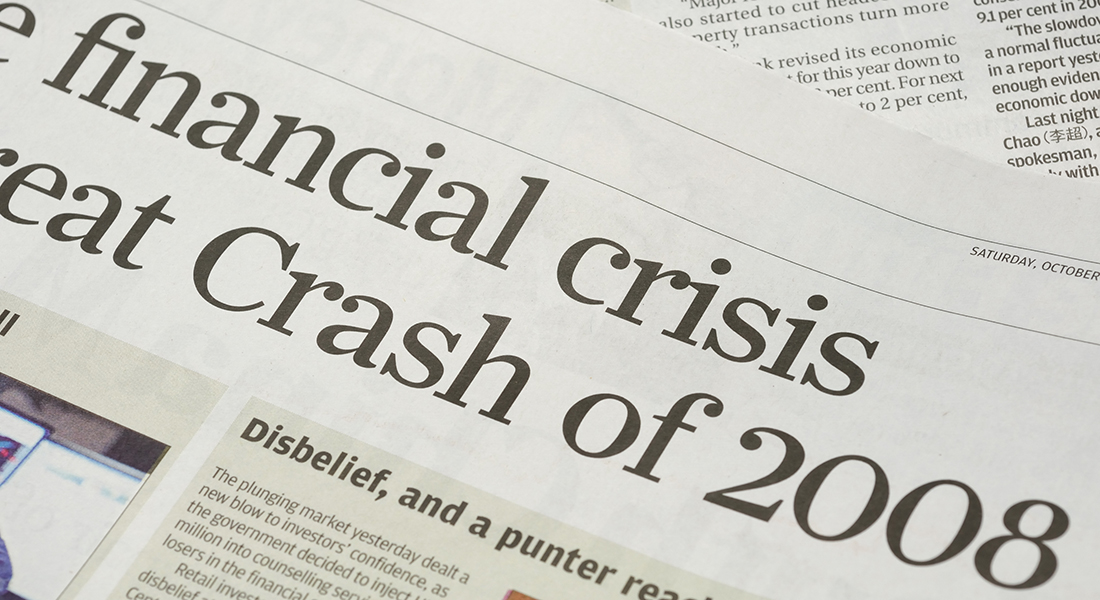
The 2008 global financial crisis forced a reckoning. Suddenly, more people and institutions than ever were questioning the accepted approaches to economic theory. Of course, this questioning had never fully stopped — but the crisis, which most of us assumed was a thing of distant history, arrived with full force, compelling even those who’d never questioned much of anything to pause and reflect. Topics like the origins of capitalism, new economic theories, alternative models, and financialization surged to the top of the agenda.
Financialization’s Role in the Crisis
Financialization can be understood as the financial industry expanding its dominance well beyond its core purpose, reaching into nearly every area of economic life. In practical terms: companies shifted their borrowing from banks to other intermediaries, banks expanded their activities to target consumers directly with new products, and households that had previously had little involvement with financial products became increasingly active participants — all at unprecedented speed.
Historical Roots of Financialization
The origins of financialization’s now-familiar dominance can be traced through the historical development of capitalism itself. Capitalism has always moved through cycles of construction, destruction, and reconstruction — driven by its inherent model of capital accumulation. Profit is the engine of that accumulation, and profit’s tendency to decline over time both fuels the need for constant growth and threatens the system’s continuity. Recognizing this, economic actors gradually shifted their investments away from production and toward finance — where they believed they could “make more money from money,” with lower costs and greater flexibility.
Different Lenses on Financialization
Several schools of thought have tried to make sense of financialization: the Regulation School, Critical Accounting, Socio-Cultural, Institutional, and Post-Keynesian approaches among them. These frameworks explain financialization through concepts like the shift from Fordist to finance-based accumulation, shareholder value maximization, corporate governance, debt-based asset price inflation, the growing role of households in financial markets, income distribution, and financial market liberalization.
Neoliberalism, Deregulation, and the Consequences
Drawing from these perspectives, we can see that deregulation — a hallmark of neoliberal financial policy — reached its apex through financialization, creating the “escape to the future” dynamic that produced today’s familiar problems. Economic actors failed to see (or chose not to see) that the financial instruments they used to spread risk actually amplified it. The unsustainable virtual prosperity created by baseless asset price inflation — and the excessive consumption it fueled — went largely unquestioned. Voices that warned of danger were mostly dismissed. The result: the 2008 global financial crisis arrived, and the very institutions that neoliberalism had weakened became the last refuge for those caught in financialization’s wave.